Report Summaries
ROSS'S GOOSE
(Anser rossii)
2022-37 16-Dec-2022 to 17-Dec-2022 (7–0): One; Heaton Orchard Road, Richmond; Tim Metcalf (I, R, P), Jan St. Jean, Allison O’Connor.
This sighting represents the eleventh accepted record for the state, all but one of which have occurred in the past two decades. The frequency of reports in Rhode Island is still quite low and—given the potential for confusion with Snow Goose and especially with hybrids with that species—the Committee will continue to review reports of Ross’s Goose.
TUFTED DUCK
(Aythya fuligula)
2022-65 08-Jan-2022 to 09-Jan-2022 (7–0): One; Trustom Pond National Wildlife Refuge, South Kingstown; Jan St. Jean (I, R, P), m.ob.
This bird appeared to be a different bird from the adult male reported from Trustom January to March 2021.
EARED GREBE
(Podiceps nigricollis)
30-Nov-2022 to 05-Dec-2022 (7–0): One; Quonochontaug Beach, Westerly; Bill Thompson (I, R, P).
The most recently accepted prior report of Eared Grebe also came from Quonnie in December 2019.
CHUCK-WILL'S-WIDOW
(Antrostomus carolinensis)
2022-3 15-Apr-2022 (7–0): One; Long and Ell Ponds Natural Area, Hopkinton; Mark Pagliarini (I, R).
Although the songs of Antrostomus nightjars can be confused by inexperienced or incautious observers, these reports included either audio recordings or at least careful explanations as to why those caveats may be confidently set aside.
This species is retained for now on the review list because reports are still few enough to warrant close scrutiny. The tendency of this southern species to expand northward and increase in frequency and abundance in Rhode Island is likely being offset by other factors tending to reduce opportunities for nightjars in general, as has been observed for many decades now on nearby Long Island, where Chuck-will’s-widow was first confirmed breeding about 50 years ago but remains rare and local.
CHUCK-WILL'S-WIDOW
(Antrostomus carolinensis)
2022-4 30-Apr-2022 to 28-Jun-2022 (7–0): One; Tillinghast Pond, West Greenwich; Barbara Sherman, Cindy Dibble, m.ob.
CHUCK-WILL'S-WIDOW
(Antrostomus carolinensis)
2022-51 23-May-2022 (7–0): One; Succotash Road, South Kingstown; Clara Cooper-Mullin (I, R, A).
RUFF
(Calidris pugnax)
2022–43 07-Aug-2022 to 09-Aug-2022 (7–0): One, male; Arnold Mills Reservoir, Cumberland; Alan Kneidel (I, R, P); m.ob.
RUFF
(Calidris pugnax)
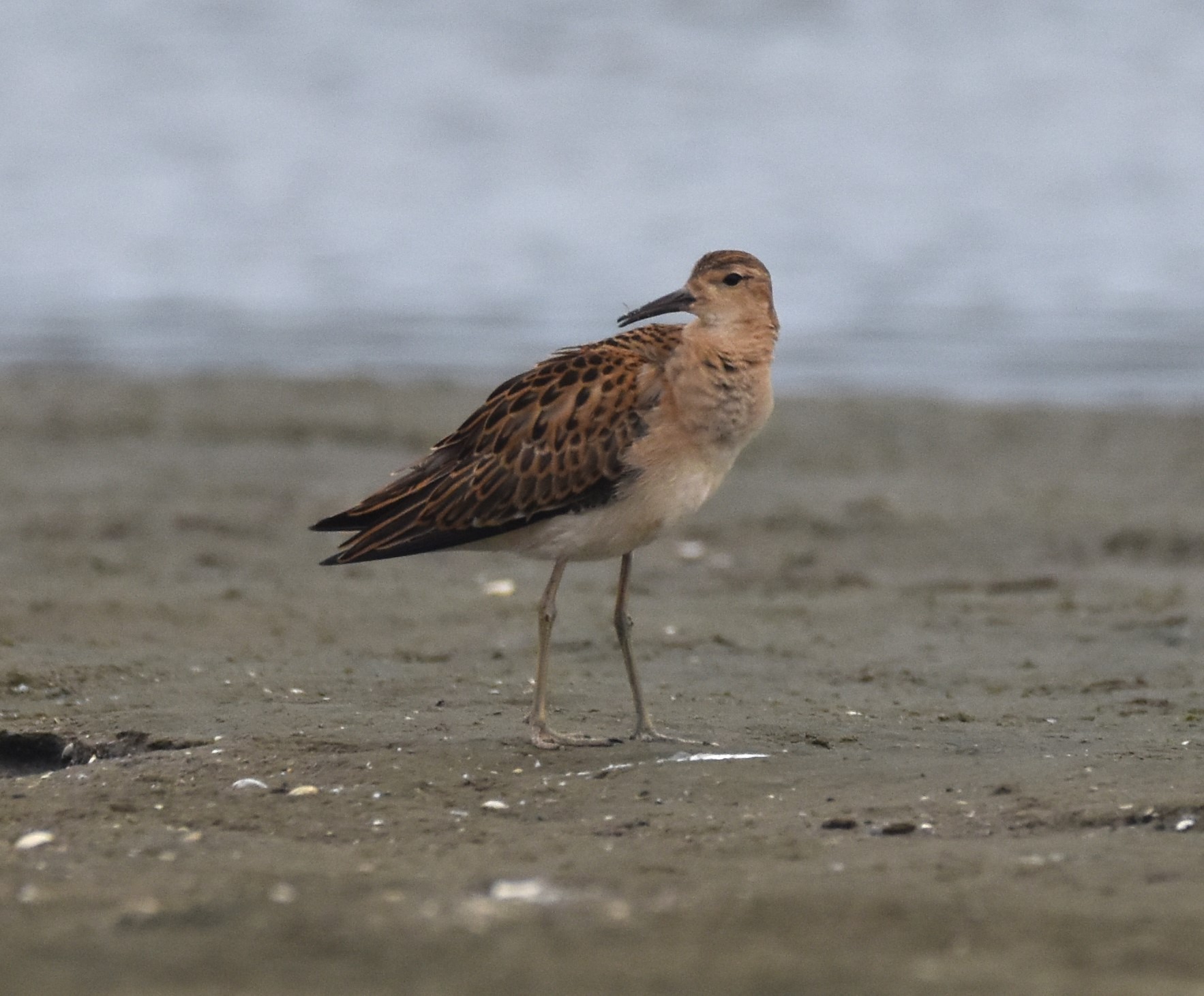
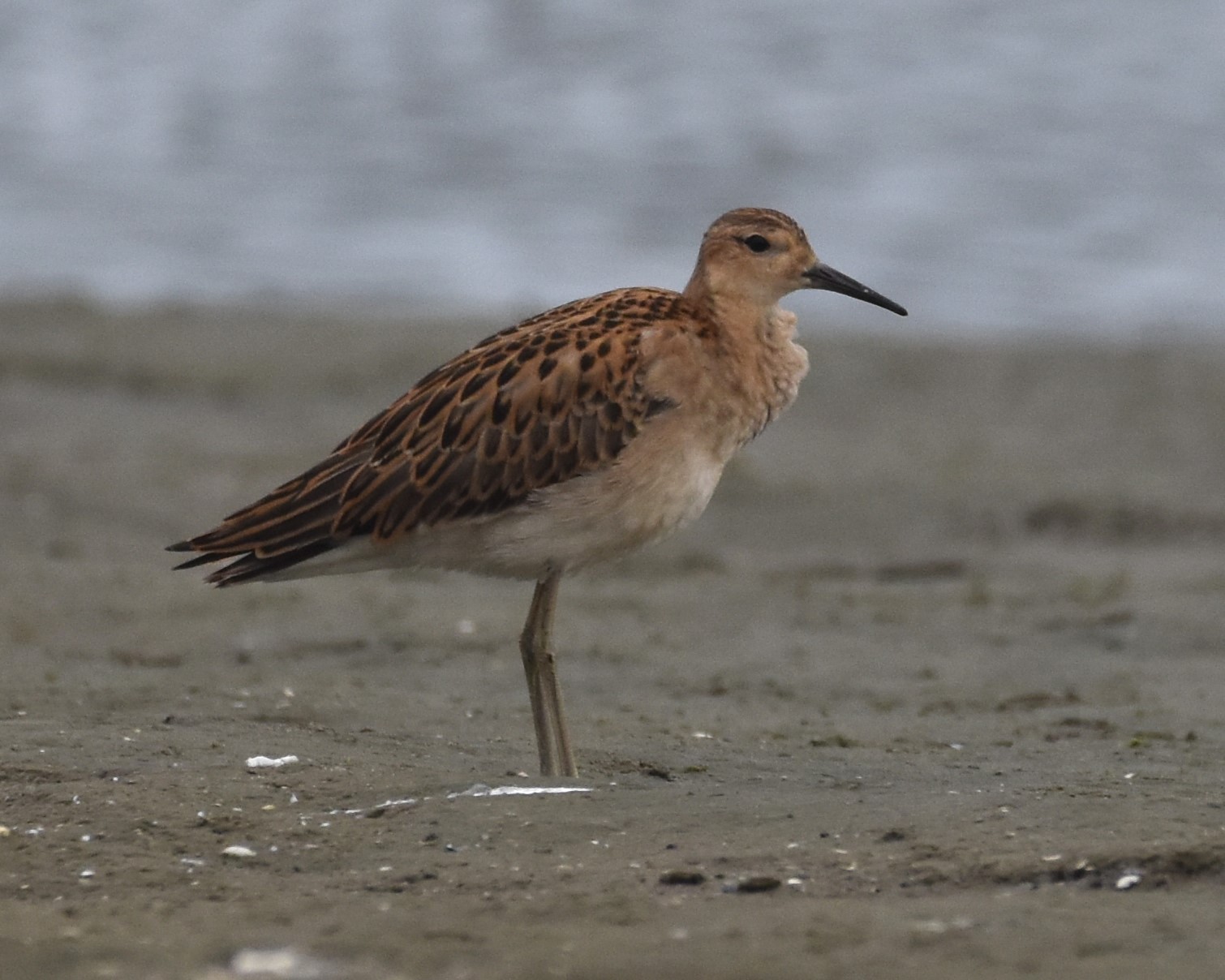
2022–52 13-Sep-2022 to 14-Sep-2022 (7–0): One, juvenile; Quonochontaug Breachway, Charlestown; Barbara Seith (I, R, P); m.ob.
Although small, Rhode Island has a long history of hosting Ruffs, dating back to a specimen collected by Newton Dexter at Sakonnet Point on July 3, 1900, and continuing through to the present. The Cumberland record is notable for its inland location in the northernmost part of the state. The Quonnie bird is unusual because juvenile Ruffs have always been exceptionally rare in eastern North America.
LONG-BILLED DOWITCHER
(Limnodromus scolopaceus)
2022–12 02-Apr-2022 to 10-May-2022 One; Succotash Marsh, South Kingstown; Richard Tucker (I), Patrick Felker (R), m.ob.
This early spring bird in Succotash Marsh was heard calling and observed at a date when Short-billed Dowitchers would be unusual.
LONG-BILLED DOWITCHER
(Limnodromus scolopaceus)
2022–13 21-Sep-2022 One; Napatree (7-0): Point, Westerly; John Bean (I, R, P), Christopher Veale (P).
Occurred in contexts where Short-billed Dowitcher is much more numerous, but the juvenile showed diagnostic plumage features that were nicely photographed.
LONG-BILLED DOWITCHER
(Limnodromus scolopaceus)
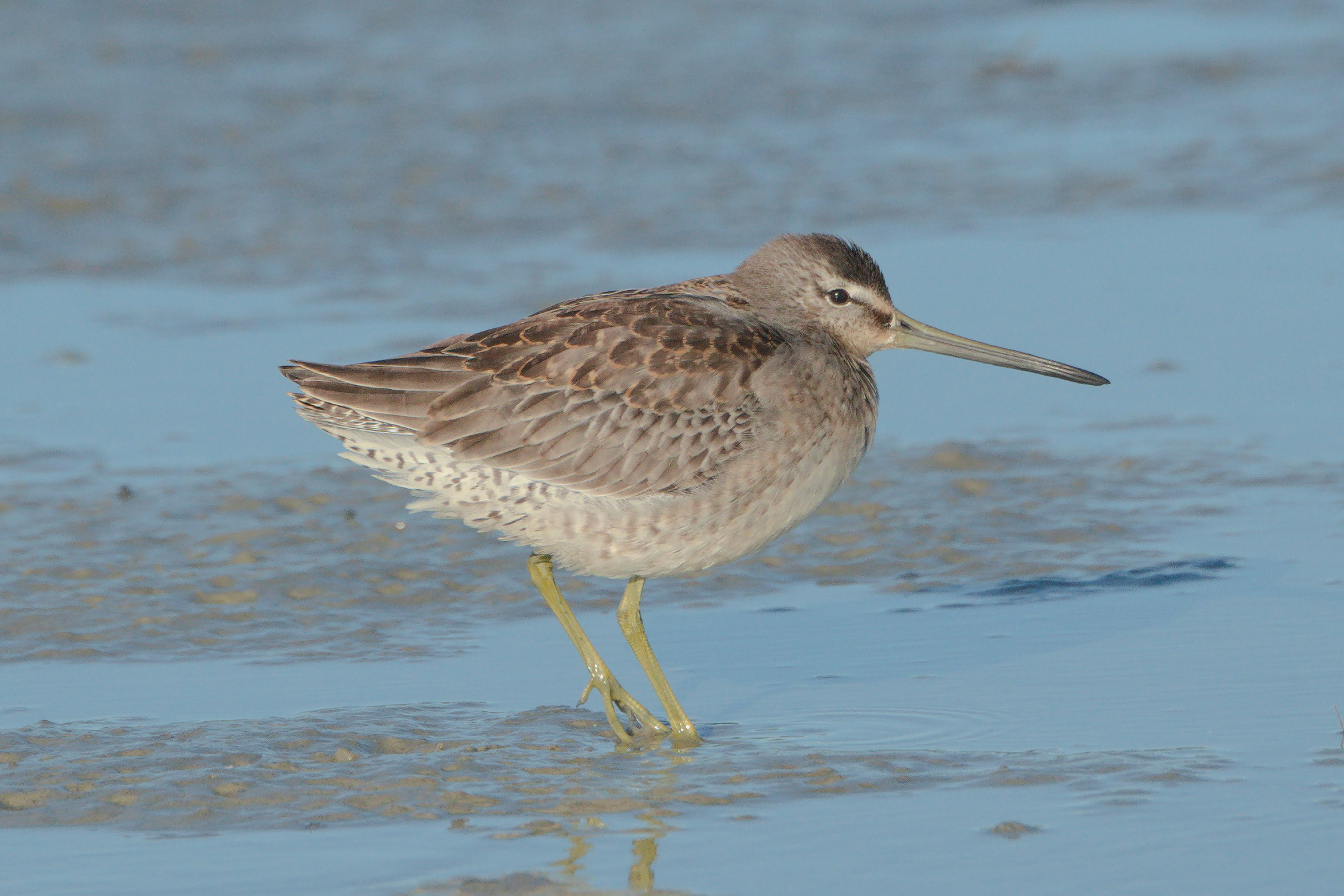
2022–15 29-Sep-2022 (7–0): One; Ninigret Pond flats, Charlestown; Paul L’Etoile (I, R, P).
Occurred in contexts where Short-billed Dowitcher is much more numerous, but the juvenile showed diagnostic plumage features that were nicely photographed.
LONG-BILLED DOWITCHER
(Limnodromus scolopaceus)
2022–14 09-Nov-2022 to 27-Nov-2022 (7–0): One; Atlantic Avenue, Westerly; Barbara Seith (I, R, P).
Photographed in a context appropriate in Rhode Island for this scarce, local, and difficult to identify species.
SOUTH POLAR SKUA
(Stercorarius maccormicki)
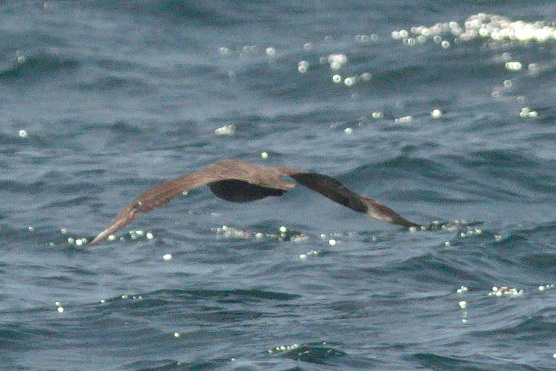
2022–44 22-May-2022 (7–0): One; Cox Ledge; Paul L’Etoile (I, R, P).
Although seen only briefly, this bird was photographed. Despite the overall decline in reports of both species of large skuas since the reduction in commercial fishing activity off Rhode Island’s shores, South Polar Skua remains fairly regular offshore from late spring through midsummer.
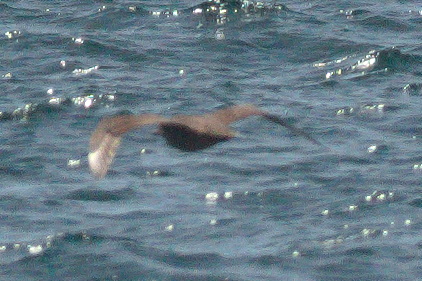
THICK-BILLED MURRE
(Uria lomvia)
2022–45 23-Jan-2022 (7–0): One; Camp Cronin, Narragansett; Melissa Alexander (I, R, P), Sam Miller (P).
This incursive species made a good showing in Rhode Island in January and February 2022, but it should be noted that it has occurred much less frequently in recent decades than in the early 20th century, when it consistently outnumbered Razorbill (which was much less numerous than at present).
THICK-BILLED MURRE
(Uria lomvia)
2022–46 24-Jan-2022 (7–0): One; Sakonnet Point, Little Compton; Joel Eckerson (I, R, P).
THICK-BILLED MURRE
(Uria lomvia)
2022–47 21-Feb-2022 (7–0): One; outside Old Harbor, Block Island; Patricia J. Lindsay (I, R), Sam Miller (P), m.ob.
GULL-BILLED TERN
(Gelochelidon nilotica)
2022–28 11-Jul-2022 (7–0): One; Ninigret Pond flats, Charlestown; Bill Thompson (I, R, P).
Gull-billed Terns, like many tern species, are detected remarkably infrequently even short distances from their breeding areas. The northeasternmost regular breeding sites for this species are along the shores of southwestern Long Island, near Jamaica Bay and Jones Inlet, and the species is rare even at Fire Island and Moriches Inlets, just to the east of these.
ARCTIC TERN
(Sterna paradisaea)
2022–24 13-May-2022 (7–0): Seven; Seekonk River, Providence; Alan Kneidel (I, R, P).
These records were part of an astonishing push of hundreds of Arctic Terns inland over New Jersey, New York State, Connecticut, and Massachusetts on May 13, 2022. Although there are a very small number of precedents for the occurrence of this species as an overland spring migrant in the Northeast—e.g., Griscom’s specimen from Cayuga Lake in central New York State on May 20, 1916—the ordinary mode of occurrence south of breeding areas involves small numbers of nonbreeders along the ocean coast from late May to mid-July (Mitra 2009). The closest thing to a precedent for the events of May 13, 2022, was the group of 16 Arctic Terns observed by Dick Forster at Heard Pond, Wayland, Massachusetts, on May 20, 1979 (Veit and Petersen 1993), although it is possible that such events are underdetected by inland observers historically unfamiliar with the potential for and identification of Arctic Terns. On May 13, members of the Committee, as well as many other active birders, received texts and phone calls from friends reporting unexpected numbers of Common Terns from interior rivers, ponds, and reservoirs, from Maryland to Massachusetts, all of which proved to be Arctic Terns, so it is easy to imagine events such as these being missed when communication was so much different from what it is now.
The Arctic Terns at Worden Pond were accompanied by a Bonaparte’s Gull, itself a rarity on inland ponds in Rhode Island. Griscom’s Arctic Tern specimen from Cayuga Lake was collected on May 20, 1916 (Griscom 1916), in the company of Bonaparte’s Gulls, a Black Tern, and North America’s earliest inland record of Little Gull (Parkes 1953). Note that Griscom did not recognize that the Little Gull he shot was not a Bonaparte’s, nor did L. A. Fuertes, who prepared the specimen (Parkes 1953). Thus, Christopher Veale’s photo-documentation of the Worden Pond Bonaparte’s Gull,and Anthony Vicciarelli’s photos and report documenting the persistence of two Arctic Terns there to May 14 (see https://ebird.org/checklist/S110342957) provide valuable context for this remarkable set of records.
ARCTIC TERN
(Sterna paradisaea)
2022–25 13-May-2022 to 14-May-2022 25+; Worden Pond, South Kingstown; Jan St. Jean (I, R); Tim Metcalf, Christopher Veale (R, P).
ARCTIC TERN
(Sterna paradisaea)
2022–26 13-May-2022 (7–0): Two; Diamond Hill Reservoir and Arnold Mills Reservoir, Cumberland; Peter Capobianco (I, R, P).
LITTLE GULL
(Hydrocoloeus minutus)
2022–48 30-Dec-2022 (7–0): One; Block Island Sound two miles south of Point Judith; also Galilee Harbor; Todd McLeish (I, R), Barbara Seith (R, P).
COMMON GULL
(Larus canus)
2022–2 11-Mar-2022 (7–0): One, subspecies canus/heinei; Narragansett Pier, Narragansett; Sam Miller, Alan Kneidel, and Keith Leonard (I, R, P).
Nominate canus is the most frequently occurring taxon among “Mew Gulls” in coastal northeastern North America, but both brachyrhynchus Short-billed Gull and kamtschatschensis Common Gull have also been documented in southern New England. In the case of the Narragansett bird, the wingtip pattern and mantle are only subtly darker than RBGU, pointing away from brachyrhynchus; the overall size is similar to RBGU and the mantle only subtly darker than RBGU, pointing away from kamtschatschensis. The East Providence bird from 2006 showed a wingtip pattern matching the Palearctic taxa but was also obviously large and dark, aligning with kamtschatschensis. Because canus and kamtschatschensis are currently regarded as conspecific, these distinct birds are here accepted as the first records of Larus canus for Rhode Island.
PACIFIC LOON
(Gavia pacifica)
2022-66 18-Nov-2022 to 19-Nov-2022 (7-0): One; Charlestown Breachway, Charlestown; Tim Metcalf, Sue Palmer (I, R, P), m.ob.
PACIFIC LOON
(Gavia pacifica)
2022-67 28-Nov-2022 to 13-Dec-2022 (7-0): One; Quonochontaug Beach and Weekapaug Breachway, Westerly; Sue Palmer (I, R, P), m.ob.
WHITE-FACED STORM-PETREL
(Pelagodroma marina)
2022-30 13-Aug-2022 (7–0): One; approximately six miles southwest of Block Island; Martin Kaehrle (I, R, P).
Excellent documentation, including description and context as well as photographs, of a remarkably close-to-shore record.
BROWN BOOBY
(Sula leucogaster)
2022–29 12-Aug-2022 to 23-Aug-2022 (7–0): One; Galilee, Narragansett; Scott Tsagarakis (I), Tim Metcalf (R, P), Sue Palmer, Bill Thompson, Chris Veale, m.ob.
This species’ frequency of occurrence in the Northeast continues to increase.
WHITE IBIS
(Eudocimus albus)
2022–33 16-Oct-2022 (7–0): One; Ninigret Pond flats; Bill Thompson (I, R, P).
Although this record is just the eleventh for Rhode Island, this species is expanding rapidly to our south, has been breeding in New Jersey since 2020, and is occurring with increasing frequency in the Northeast.
WHITE-FACED IBIS
(Plegadis chihi)
2022–5 22-Apr-2022 (7–0): Two; Seapowet Marsh, Tiverton; Richard Bradley (I, R), Tim Metcalf (P).
This species has been reported annually in recent years.
WHITE-FACED IBIS
(Plegadis chihi)
2022–6 02-May-2022 to 22-May-2022 (7–0): One; Fort Getty, Jamestown; B. J. Whitehouse (I), Tim Metcalf (R, P).
WHITE-FACED IBIS
(Plegadis chihi)
2022–7 15-Jun-2022 (7–0): One; Seapowet Marsh, Tiverton; Sam Miller, Joel Eckerson (I, R, P).
AMERICAN WHITE PELICAN
(Pelecanus erythrorhynchos)
2022–64 25-Sep-2022 to 30-Sep-2022 (7–0): One; Passeonkquis Cove, Warwick and Quonochontaug Breachway, Charlestown; Bill Aldrich (I), Barbara Gearhart (R, P), m.ob.
BROWN PELICAN
(Pelecanus occidentalis)
2022–35 05-Nov-2022 to 06-Nov-2022 (7–0): One; Napatree Point, Westerly; Bill Thompson (I, R, P).
As was noted in our Fourth Report, Brown Pelicans remain rare in Rhode Island, and this record is the first since two in 2019. As noted there also, the seasonality of Rhode Island differs such that the irregular but sometimes large incursions of this species along the ocean coast of nearby Long Island, New York, have not yet occurred along Rhode Island’s south shore or even off Block Island.
Inclusion on the review list of this highly distinctive species has been debated since the beginnings of RIARC, but experience has shown that inexperienced observers sometimes misidentify distant Northern Gannets, and even other species, as Brown Pelicans. Records are few enough in Rhode Island to warrant continued scrutiny.
GOLDEN EAGLE
(Aquila chrysaetos)
2022–53 18-Dec-2022 (7–0): One; Burlingame State Park, Charlestown; Scott Tsagarakis (I), Jessica Bishop (I, R, P), Allison O’Connor (I).
MISSISSIPPI KITE
(Ictinia mississippiensis)
2022–19 16-May-2022 to 18-May-2022 (7–0): Two; Warwick; Andy Eckerson (I, R, P).
These records reflect the recent and ongoing expansion of this species in the Northeast.
MISSISSIPPI KITE
(Ictinia mississippiensis)
2022–20 18-May-2022 (7–0): One; Benson Preserve, North Kingstown; Jan St. Jean, Carlos Pedro, Chris Veale, Tim Metcalf (I, R, P).
MISSISSIPPI KITE
(Ictinia mississippiensis)
2022–21 22-May-2022 (7–0): One; Dear Run Road, Richmond; Erin Metcalf, Tim Metcalf (I, R, P).
MISSISSIPPI KITE
(Ictinia mississippiensis)
2022–22 29-May-2022 to 30-May-2022 (7–0): One; Francis Carter Preserve, Charlestown; Tom Younkin (R, P).
WESTERN KINGBIRD
(Tyrannus verticalis)
2022–31 23-Sep-2022 (7–0): One; Trustom Pond NWR, South Kingstown; Sandra Slead, Russ Mungeam (I, R, P).
Records are few enough in Rhode Island, and potential for confusion with other species of Tyrannus significant enough, to warrant continued scrutiny.
WESTERN KINGBIRD
(Tyrannus verticalis)
2022–32 08-Oct-2022 (7–0): One; North Light, Block Island; Joel Eckerson, Harrison Hepding, Matthew Eckerson, Sam Miller (I, R, P).
GRAY KINGBIRD
(Tyrannus dominicensis)
2022–36 04-Nov-2022 to 06-Nov-2022 (7–0): One; Watch Hill, Westerly; Noah Barreto (I, R, P), m.ob.
Rhode Island’s second, this Gray Kingbird followed quickly after the first, which was recorded at Goosewing Beach in 2020.
SCISSOR-TAILED FLYCATCHER
(Tyrannus forficatus)
2022–27 02-Jun-2022 (7–0): One; Francis Carter Preserve, Charlestown; Louis Sokolow (I, R, P).
Known from the Northeast for many decades as a very low-density vagrant, Scissor-tailed Flycatcher is notorious for the brevity of its appearances in our region.
CAVE SWALLOW
(Petrochelidon fulva)
2022–08 14-Apr-2022 (7–0): One; Camp Cronin, Narragansett; Jon Piasecki, Finn Harty, Sam Miller (I, R, P).
CAVE SWALLOW
(Petrochelidon fulva)
2022–09 18-Apr-2022 (7–0): One; Trustom Pond NWR, South Kingstown; Bill Thompson (I, R, P).
CAVE SWALLOW
(Petrochelidon fulva)
2022–10 14-Nov-2022 (5–1): Three; Napatree Point, Westerly; Eric Cameron, David Nelson (I, R).
CAVE SWALLOW
(Petrochelidon fulva)
2022–11 17-Nov-2022 (7–0): One; Charlestown Breachway, Charlestown; Claudia Cooper (I, R, P).
BICKNELL'S THRUSH
(Catharus bicknelli)
2022–55 30-Sep-2022 (7–0): One; Kingston, South Kingstown; Patrick Felker, Noah Goldthwait (I, R, P).
This banded bird represents Rhode Island’s fifth documented record of Bicknell’s Thrush. All of the records listed here refer to banded birds, dating back to 1991, when D. L. Kraus identified the first of three at his Kingston banding station (Ferren 2024; also the site of the current record), with another from Block Island in 2016.
The bird was originally identified as a Gray-cheeked Thrush before review of photos showed that it looked good for Bicknell’s. Measurements were double-checked, and the bird was convincingly identified by a formula combining wing chord and tail length, which is more discerning than each measurement alone. Even so, both of these measurements fell outside of the ranges of overlap with Gray-cheeked Thrush.
VARIED THRUSH
(Ixoreus naevius)
2022–39 08-Apr-2022 to 13-Apr-2022 (7–0): One; Kingston, South Kingstown; Devin Silversmith (I, R, P), m.ob.
This species is one of several western North American vagrants that tend to be detected at feeding stations during the winter. Such overwintering birds are often last seen on dates from late March through mid-April, a relatively under-recognized window for new detections of this species (Mitra 2015), as in the current case.
MACGILLIVRAY'S WARBLER
(Geothlypis tolmiei)
2022-01 22-Nov-2022 (6–0): One; Blackstone Park, Providence; Dan Finizia (I, R, P), Sue Talbot (I, R, P).
A much anticipated first for Rhode Island, this MacGillivray’s Warbler was found by veteran birders Dan Finizia and Sue Talbot. Their superb photos and unambiguous description provide excellent documentation for this subtle identification. Furthermore, a number of other observers were able to see and photograph the bird during its brief stay.
WESTERN TANAGER
(Piranga ludoviciana)
2022–56 04-Jan-2022 to 16-Jan-2022 (7–0): Two; Avondale Farm, Westerly; Glenn Williams (I), Christopher Veale (R, P), m.ob.
One of the two Avondale birds was a continuing bird discovered by Glenn Williams on the Napatree CBC in December 2021, as described in the Committee’s Fifth Report (#2021–35); it was apparently joined by a second bird in early January 2022.
WESTERN TANAGER
(Piranga ludoviciana)
2022–57 18-Jan-2022 to 29-Jan-2022 (7–0): One; Touisset Point, Warren; K. Bartels (I, R, P), m.ob.
RUFOUS/ALLEN'S HUMMINGBIRD
(Selasphorus rufus/sasin)
2022–40 12-Nov-2022 to 15-Nov-2022 (7–0): One; Charlestown; David Nelson, Eric Cameron (I, R, P).
As is often the case, this individual could not be identified to species with confidence.
RUFOUS/ALLEN'S HUMMINGBIRD
(Selasphorus rufus/sasin)
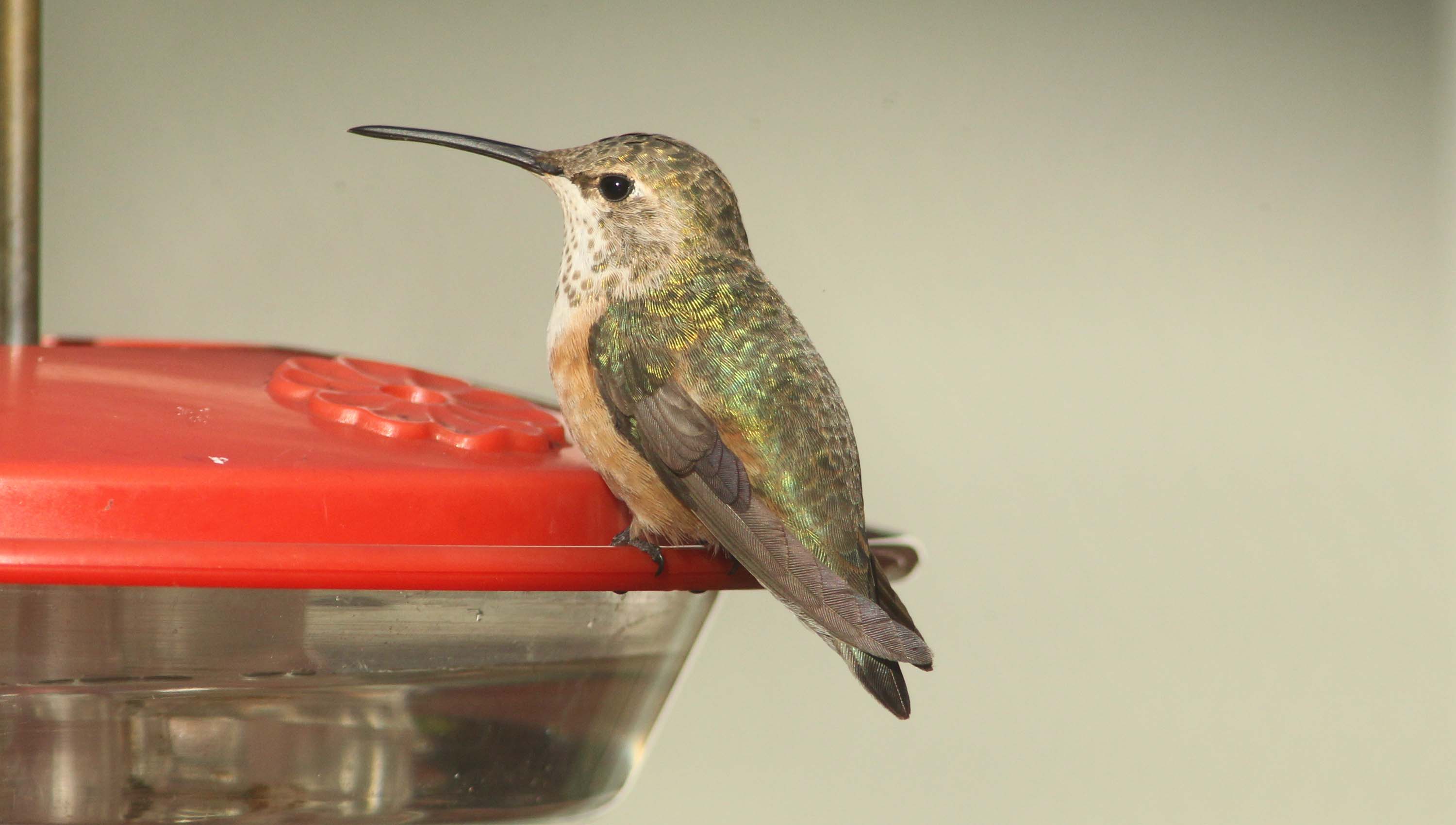
2022-68 14-Nov-2022 to 15-Dec-2022 One; Wakefield; Barbara Chaves (I), Geoff Dennis (R, P).
As is often the case, this individual could not be identified to species with confidence.